
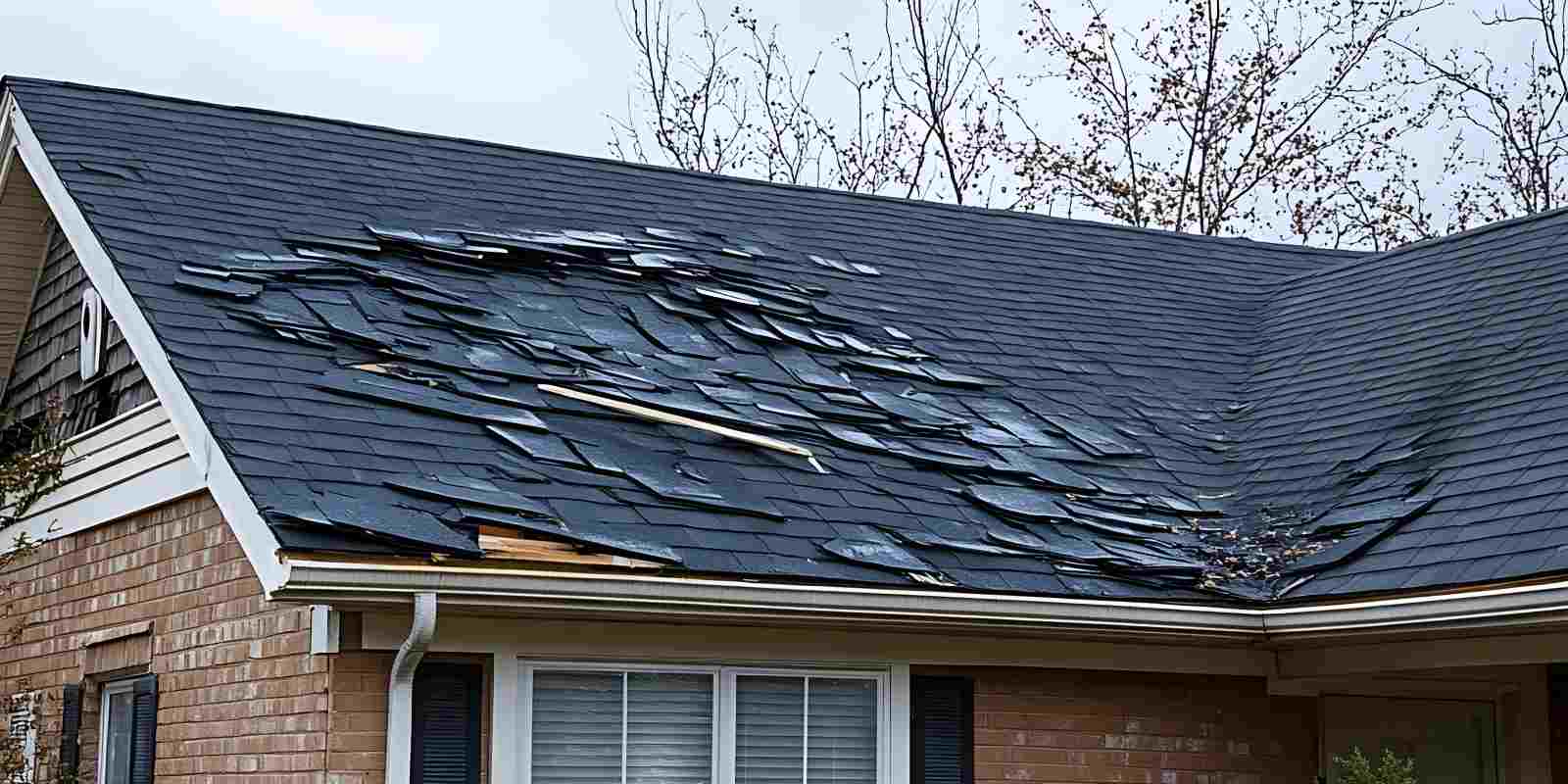
After a hailstorm in Northern Virginia, many homeowners look at their roof from the driveway and assume everything is fine because nothing is obviously broken. That’s where the problem starts. Hail doesn’t always leave visible holes or missing shingles. It leaves bruising, granule loss, and fractures that weaken the roofing material over time, often without creating an obvious sign from the ground.
The difference between hail damage and normal wear changes everything about how to move forward, including whether a repair makes sense, whether replacement belongs in the conversation, and whether the damage qualifies for an insurance claim. Getting that distinction wrong means potentially absorbing a cost that your policy may have covered.
Why Misreading Your Roof After a Hailstorm Can Cost You Thousands
Failing to identify storm-related damage doesn’t just delay a repair. It can mean paying out of pocket for work that your homeowner’s insurance may have been designed to cover. Hail damage that goes undocumented is hail damage that can’t be claimed.
The financial stakes are real, and they go up the longer the damage sits unaddressed. What starts as a shingle issue can become a decking problem, an insulation problem, or an interior water damage problem once the compromised material is exposed to the next storm or freeze cycle.
A professional inspection with thorough documentation is the most reliable way to understand what the hail actually did to your roof and whether it warrants a claim.
What Hail Actually Does to a Roof
Hailstones don’t need to be large to cause damage. When hail strikes asphalt shingles, it dislodges granules, compresses the mat beneath, and creates bruising that weakens the shingle’s ability to shed water. The National Severe Storms Laboratory explains that wind-driven hail can strike at an angle, meaning one side of a roof may sustain heavier impact while another shows little visible evidence.
Damage severity depends on hailstone size, density, wind direction, and the roofing material itself. Two identical homes on the same street can come through the same storm with very different levels of impact. That variability is part of why a roof-level inspection matters more than a glance from the ground.
How to Tell Hail Damage From Normal Wear on Asphalt Shingles
On asphalt shingles, hail damage typically appears as random circular or irregular marks where granules have been knocked loose. These spots may look darker than the surrounding surface, feel soft or bruised when pressed, or reveal the black asphalt mat beneath. Stronger impacts can crack or fracture shingle tabs entirely.
Normal aging looks different. Uniform granule thinning across the full roof field, edge cracking from UV and thermal cycling, and moss or algae growth unrelated to impact points are all signs of wear, not storm damage.
IBHS notes that blistering, installation scuffs, mechanical abrasion, and age-related granule loss can all resemble hail damage at a glance. That’s why distinguishing between the two requires trained eyes and a roof-level review, not a photo from the ground.
How Hail Shows Up on Other Roofing Materials
Metal Roofing
Hail can dent metal panels and fracture paint coatings. Some marks are cosmetic, but even cosmetic damage can void manufacturer warranty coverage depending on the system. NRCA’s guidance notes that different roof systems show different types of hail effects, including indentation and coating issues on metal.
Cedar or Wood Shake
Hail creates fresh splits and sharp-edged impact marks that differ from the weathering checks and cracks that develop naturally over time. NRCA describes hail-caused wood splits as damage with characteristics distinguishable from normal aging patterns.
Flat and Low-Slope Systems
Membrane punctures, surface aggregate displacement, and seam stress are common on flat roofs after hail. These findings are frequently missed during standard assessments because they require a roof-level review to identify.
What a Professional Inspection Covers
A thorough post-hail inspection goes well beyond checking for cracked shingles. A qualified inspector evaluates the full roof system, including all roof planes and slopes (especially rear and side elevations that are harder to see from the ground), ridge caps, valleys, and transition points, flashing around chimneys, skylights, vents, and pipe boots, gutters, downspouts, and other exposed metal surfaces, and pattern consistency across multiple elevations to confirm the damage aligns with a storm event.
Corroborating evidence matters. Dented gutters, pockmarked AC condenser fins, and damaged vent caps all support the finding that the property experienced a qualifying hail event.
The inspection report itself is just as important as the inspection. Written findings, dated photographs, and clear documentation of the location and pattern of damage create a record that supports every conversation that follows, whether that’s a repair estimate, a replacement plan, or a claim filing.
How Insurance Adjusters Evaluate Hail Damage and What They Sometimes Miss
Insurance adjusters work on behalf of the carrier, not the homeowner. Their assessments are often completed quickly, and in many cases, they don’t examine every roof plane, particularly rear slopes and side elevations that require additional access.
Common oversights include damage on secondary slopes that weren’t inspected, soft metal impacts on vents and gutters that corroborate shingle findings, and hail hits obscured by debris, algae, or shadow. An initial assessment that minimizes the damage or results in a denial is not always the final word.
Homeowners have the right to request a re-inspection if the initial assessment appears incomplete or inconsistent with what’s visible on the roof. In Virginia, homeowners may also choose to involve a licensed public adjuster to represent their interests during the claims process.
Why Having Your Contractor Present at the Adjuster Inspection Matters
Having a licensed roofing contractor on-site during the adjuster’s visit is standard industry practice across the NoVa area. A qualified contractor can identify damage the adjuster may overlook, provide real-time documentation, and confirm that the full scope of the damage is being recorded.
This isn’t adversarial. Adjusters and contractors who work together on-site tend to produce more accurate and complete assessments because both parties are looking at the same evidence at the same time. For the homeowner, it means the inspection is more likely to reflect the actual condition of the roof.
Filing a Claim After Hail: Step by Step for Northern Virginia Homeowners
If you suspect hail damage, here’s the process that gives you the strongest position:
- Schedule a professional inspection before contacting your insurance carrier. You want documented findings in hand before the claims process begins, not after.
- Obtain a written inspection report. This should include dated photographs, a description of the damage by location and type, and a repair or replacement estimate.
- File the claim with your carrier. Request a specific date for the adjuster inspection so you can coordinate your contractor’s presence.
- Have your roofing contractor present during the adjuster’s visit. They can identify damage the adjuster may not catch and confirm that all affected areas are included in the scope.
- Review the adjuster’s scope against your contractor’s estimate before accepting any settlement. If the two don’t align, you have the documentation to support a conversation about what was missed.
Get Your Roof Documented Before You File
The difference between a strong claim and a frustrating one usually comes down to documentation. A professional roof assessment after hail gives you a clear record of what the storm did, how it differs from normal aging, and what the appropriate repair or replacement scope looks like.
Pure Roofing provides thorough, fully documented inspections for Northern Virginia homeowners after hail events. We’ll walk you through what we find, explain how it compares to normal wear, and give you the documentation you need to make informed decisions about your next steps. Contact Pure Roofing to schedule your inspection.