


If you suspect your Northern Virginia roof has been damaged, or simply reached the end of its service life, squinting at it from the yard won’t tell you much. Asphalt shingles are designed to look uniform from 40 feet away, and much of what shortens a roof’s life happens where you can’t see it from the ground.
A professional roof assessment goes past the surface. An experienced, licensed contractor checks the deck, flashing, ventilation, underlayment, and gutters, with particular attention to the areas where the roof is interrupted by chimneys, skylights, and vents. Those transition points are where most problems start, and they’re the areas a ground-level look consistently misses.
| In This Article: What a professional roof inspection actually covers, from shingle condition and flashing to the attic, decking, and ventilation. Plus why a ground-level walkthrough and a general home inspection leave gaps that matter, and what you should receive after the assessment is complete. |
Why the View From the Ground Isn’t Enough
Your own walkthrough catches the obvious stuff. Shingles torn loose after a windstorm, a gutter pulling away from the fascia, a stain creeping across the bedroom ceiling. All worth acting on, but all lagging indicators.
A general home inspection also isn’t a roof inspection. Under InterNACHI’s standards of practice, a home inspector is not required to “walk on any roof surface.” Their obligation is to examine, from ground level or the eaves, the covering, gutters, downspouts, flashing, skylights, and chimney.
That scope is reasonable for a buyer’s due diligence. It doesn’t answer what somebody with a 20-year-old roof is actually asking.
Hail is a prime example of why that sort of visual inspection isn’t enough. Hailstones can crack the mat at the bottom of the shingle, while the granule surface above it still looks fine. It may appear visually normal, but the damage can develop leaks.
What We Look for on the Roof Surface
In asphalt shingles, the visible granules protect the asphalt underneath from sunlight and storm damage. They also give the shingle its color. But it’s the underlying asphalt that waterproofs the roof. The granules can appear unchanged even after the waterproofing layer has been compromised.
Normal loss of the top granules generally follows a pattern. A pile in one downspout means something different from even wear across the whole roof, and bare patches under a valley in the roof usually suggest wear from water volume in that area, rather than age.
Pipe boots are the rubber collar around plumbing vents. The rubber can weather and age differently from the rest of the roof, and may need to be replaced on a different schedule. Cracks tend to show up around year 10 or 12, well within the lifespan of most shingles, and can lead to leaks. Chimney counterflashing works its way out of mortar joints on roughly the same timeframe, with similar consequences.
Nail pops can be caused by changing outdoor temperature and humidity, or by a poorly vented attic. The expanding and contracting materials cause the nail to back out of the roof, lifting the shingles from underneath. If left untreated, they cause premature wear in the shingle, and lead to leaks.
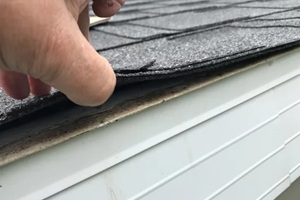
Some wind damage is missed for a different reason. A strong gust can break the self-sealing adhesive under a shingle, without moving it from its spot. Nothing looks wrong from the ground, but the shingle has lost its bonding and could lift in the next storm. You can’t check seal integrity with binoculars. Somebody has to walk the windward slopes and check by hand.
What the Attic and Roof Deck Reveal
In an attic, we look for soft or spongy decking, delaminated sheathing, dark staining around penetrations, and rusted nail shanks. Frost or corrosion on exposed nail points in winter can be caused by condensation from trapped humidity rather than a roof leak, which new shingles wouldn’t fix.
We also check airflow when we inspect the attic. Insulation packed against the eaves blocks airflow through the soffit. Bath fans sometimes vent into the attic instead of through the roof. Both can affect the deck from inside the home.
Code sizes attic ventilation as a ratio of net free vent area to the area being ventilated. The baseline in IRC R806.2 is 1 square foot of vent for every 150 square feet. You’re allowed to cut that requirement in half to 1 in 300, but only if the ventilation is balanced with 40 to 50 percent of the area up near the ridge and the rest down at the eaves.
At Pure Roofing, we evaluate ventilation and insulation on every replacement project. If a hot, damp attic aged the old roof early, a new roof will do exactly the same thing.
What You Should Get After a Roof Assessment
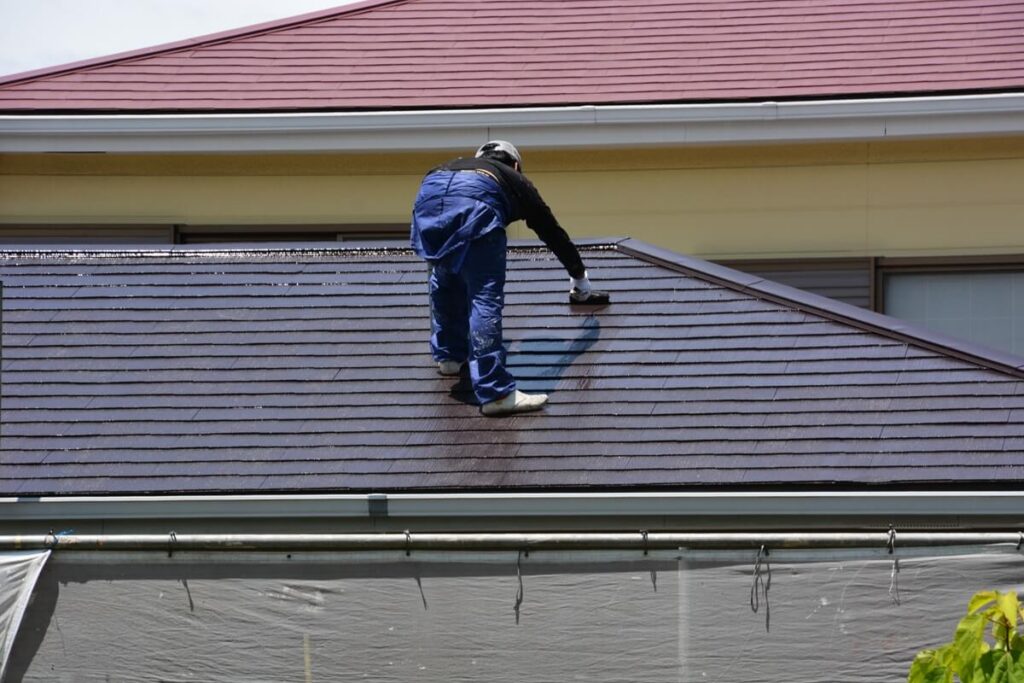
After an inspection, you should expect photos of every area of concern, a written summary of the roof’s condition, and a straight-foward recommendation on repair versus replacement. You should also expect an estimate for the cost of the recommended next steps.
If there’s storm damage, photos can be used when you file with your insurer, and we can talk you through what to expect in a claims process. The claim itself stays between you and your insurance company.
How Often To Have an Inspection Done
A rule of thumb on when to have your roof inspected is after any storm that included hail or sustained wind, every two years for a newer roof, and once a year if your roof is older than 10 years.
Winters in Northern Virginia cycle above and below freezing, which can work flashing loose a little at a time. Summer storms can bring hail and wind in the same afternoon. And heavy tree cover fills valleys with debris and keeps shaded slopes damp for weeks.
If your roof is due for an inspection, contact Pure Roofing. We’ll give you an honest read on where your roof stands and a clear explanation of what it needs next, from a team that has been working on Northern Virginia roofs since 1983.