Two quotes for a roof replacement on the same house, several thousand dollars apart. Both contractors measured the same slopes and both quoted architectural shingles, but you can’t find an explanation for the price difference from their paperwork.
Those costs could be buying you something real, such as better underlayment, flashing, ventilation, and warranty terms. Here is where the money actually goes on a roof replacement.
Not All Architectural Shingles Are the Same Product
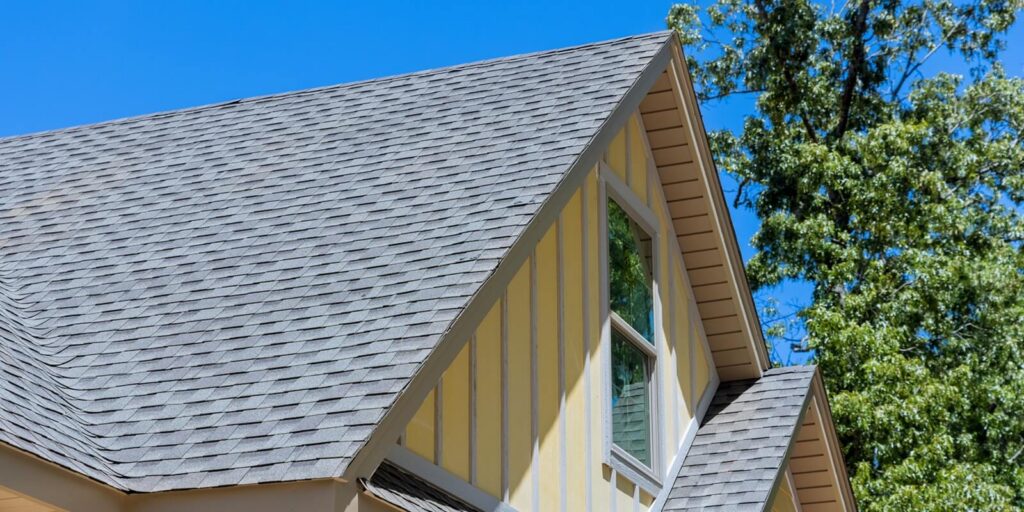
“Architectural” shingles are made by bonding two or more layers of asphalt-coated fiberglass together. The lamination gives the shingles a thick, textured, three-dimensional profile that mimics the look of natural materials like cedar shakes or slate.
Both builder-grade laminates and heavyweight designer shingles are considered architectural, but they differ significantly in quality and longevity.
Wind is an easy area to see these differences. ASTM D7158 rates shingles by the wind speed they withstand in testing when installed according to manufacturer specifications. Class D is 90 mph, Class G is 120 mph, and Class H is 150 mph. An open lot in western Loudoun County is a different wind problem than a wooded street in Vienna, and the shingle should match. Shingles with a better wind rating cost more, but the rating exists for a reason.
Impact resistance is harder to evaluate because hail damage isn’t always visible. UL 2218 rates shingles by testing the effect that steel balls have on them when dropped from certain heights. Class 4 is the most impact resistant; a two-inch ball dropped from twenty feet should not fracture the mat on a Class 4 shingle.
Lower-rated shingles bruise under the same condition. When a shingle is bruised, the granules can still look fine from the ground, but the mat may be compromised to the point that it begins to allow water to pass.
Shade is the variable most overlooked. Northern Virginia summers are humid and heavy tree cover keeps north-facing slopes damp much of the year. A shingle with a longer algae-resistance warranty is a better fit in these conditions.
The Layers Under and Around the Shingles Do Real Work
The underlayment is a water-resistant or waterproof layer between the roof deck and the shingles. Synthetic underlayment costs more than asphalt-saturated felt, but the difference in performance is real. Felt wrinkles when it gets wet, and those wrinkles telegraph through the finished surface where you can see them from the driveway. Felt also tears in the wind while the roof is open, which matters during a Northern Virginia spring when weather can be as unpredictable as it can be blustery.
Self-adhered leak barrier in the roof’s valleys, around the chimney, and at low-slope transitions is another line item that increases the cost. Code does not require leak barriers everywhere in Northern Virginia, so it is one of the first things a low bid drops.
Low bids also overlook kickout and step flashing. Kickout flashing is an angled piece of metal or plastic installed at the bottom of a roof-to-wall intersection that diverts water coming off the roof into the gutter instead of onto the wall. Step flashing is a series of small L-shaped pieces installed where a sloped roof meets a vertical wall, and also helps divert water away from the home.
Installation Is Where Roofs Are Won or Lost
Shingle manufacturers define a “nail zone” for their shingles, a band along the shingle where nails should be driven. Nail zones are reinforced, double-layered areas designed to be stronger than the rest of the shingle.
Nails driven above the manufacturer’s nail zone hold the shingle by its top edge instead of through the laminate, and that compromises the integrity of the roof. On a premium installation, six nails per shingle instead of four is standard and is a requirement for enhanced warranties.
Ventilation should also be considered when looking at a roofing quote. Virginia code sets a minimum ratio of vent area to attic floor area, and the balance between intake and exhaust is what makes that number work. A ridge vent, for example, without proper soffit ventilation can pull conditioned air out of your house instead of bringing outside air across the deck.
Getting the ventilation right takes time, which adds cost to the installation.
What the Lower Bid Might Cost You Later
Manufacturers offer warranties on their products, and products with longer warranties are more expensive. Contractors also offer workmanship warranties that cover aspects of the installation.
Manufacturer warranties cover defects in the material, not mistakes made during installation or damage from storms that exceed the product’s rating. A shingle that blows off because of a high nail is a workmanship problem. Damage from winds faster than the product’s rating is storm damage. Both fall outside the warranty.
The system warranties that do cover installation error are only available through manufacturer-certified contractors, and they generally require the full component set from that manufacturer.
Pure Roofing is a Platinum Preferred contractor with Owens Corning, which allows us to offer the manufacturer’s strongest warranty packages. For NOVA homeowners comparing bids, the warranty tier a contractor can access is one of the most concrete differences between a premium installation and a standard one.
How To Tell Which Quote Is Actually Better
If you’re comparing quotes with vague descriptions and bottom lines that are vastly different, ask the contractors for more detail. Start by asking for the shingle line, the underlayment, the leak barrier, the flashing scope, the starter, and the ridge cap by manufacturer and model.
The contractor should be able to tell you what the shingles are rated for in wind and impact, how many nails go into each one and where they land, and how they calculated the intake and exhaust numbers for your attic. Those specifics should be comparable across your other quotes.
Talk Through Your Options With Pure Roofing
If you’re looking at vague quotes with different costs that you can’t reconcile, contact Pure Roofing. We’ll walk your roof, show you what we find, and explain what we would spec and why. If the more expensive approach is not worth it on your house, we will say so.
Call Pure Roofing at (571) 445-8032 or contact us online to schedule an appointment with a team that has been roofing Northern Virginia homes since 1983.