• Skip to primary navigation
  • Skip to main content
  • Skip to primary sidebar

Proudly Serving VA, MD, & PA

  • Blog
  • Contact
  • Financing
(571) 725-2515
Pay Your Bill

Pure Roofing

Pure Roofing logoPure Roofing logo lightPure Roofing logo

Roof Repair & Replacement Contractor

  • Services

    • Roofing
    • Commercial Roofing
    • Doors & Windows
    • Siding
    • Gutters
    • Insulation
  • Storm Damage
    • Insurance Claims
  • Areas Served
  • About
    • Gallery
    • Referral Program
    • Reviews
    • Our Process
    • Team
  • Careers
    • Why Pure Roofing
    • Team Culture
    • Team Gallery
Emergency Roofing
Request An Estimate
Call (571) 725-2515

Roofing

May 12, 2026 by Billy Sampson

After a hailstorm in Northern Virginia, many homeowners look at their roof from the driveway and assume everything is fine because nothing is obviously broken. That’s where the problem starts. Hail doesn’t always leave visible holes or missing shingles. It leaves bruising, granule loss, and fractures that weaken the roofing material over time, often without creating an obvious sign from the ground.

The difference between hail damage and normal wear changes everything about how to move forward, including whether a repair makes sense, whether replacement belongs in the conversation, and whether the damage qualifies for an insurance claim. Getting that distinction wrong means potentially absorbing a cost that your policy may have covered.

Why Misreading Your Roof After a Hailstorm Can Cost You Thousands

Failing to identify storm-related damage doesn’t just delay a repair. It can mean paying out of pocket for work that your homeowner’s insurance may have been designed to cover. Hail damage that goes undocumented is hail damage that can’t be claimed.

The financial stakes are real, and they go up the longer the damage sits unaddressed. What starts as a shingle issue can become a decking problem, an insulation problem, or an interior water damage problem once the compromised material is exposed to the next storm or freeze cycle.

A professional inspection with thorough documentation is the most reliable way to understand what the hail actually did to your roof and whether it warrants a claim.

What Hail Actually Does to a Roof

Hailstones don’t need to be large to cause damage. When hail strikes asphalt shingles, it dislodges granules, compresses the mat beneath, and creates bruising that weakens the shingle’s ability to shed water. The National Severe Storms Laboratory explains that wind-driven hail can strike at an angle, meaning one side of a roof may sustain heavier impact while another shows little visible evidence.

Damage severity depends on hailstone size, density, wind direction, and the roofing material itself. Two identical homes on the same street can come through the same storm with very different levels of impact. That variability is part of why a roof-level inspection matters more than a glance from the ground.

How to Tell Hail Damage From Normal Wear on Asphalt Shingles

On asphalt shingles, hail damage typically appears as random circular or irregular marks where granules have been knocked loose. These spots may look darker than the surrounding surface, feel soft or bruised when pressed, or reveal the black asphalt mat beneath. Stronger impacts can crack or fracture shingle tabs entirely.

Normal aging looks different. Uniform granule thinning across the full roof field, edge cracking from UV and thermal cycling, and moss or algae growth unrelated to impact points are all signs of wear, not storm damage.

IBHS notes that blistering, installation scuffs, mechanical abrasion, and age-related granule loss can all resemble hail damage at a glance. That’s why distinguishing between the two requires trained eyes and a roof-level review, not a photo from the ground.

How Hail Shows Up on Other Roofing Materials

Metal Roofing

Hail can dent metal panels and fracture paint coatings. Some marks are cosmetic, but even cosmetic damage can void manufacturer warranty coverage depending on the system. NRCA’s guidance notes that different roof systems show different types of hail effects, including indentation and coating issues on metal.

Cedar or Wood Shake

Hail creates fresh splits and sharp-edged impact marks that differ from the weathering checks and cracks that develop naturally over time. NRCA describes hail-caused wood splits as damage with characteristics distinguishable from normal aging patterns.

Flat and Low-Slope Systems

Membrane punctures, surface aggregate displacement, and seam stress are common on flat roofs after hail. These findings are frequently missed during standard assessments because they require a roof-level review to identify.

What a Professional Inspection Covers

A thorough post-hail inspection goes well beyond checking for cracked shingles. A qualified inspector evaluates the full roof system, including all roof planes and slopes (especially rear and side elevations that are harder to see from the ground), ridge caps, valleys, and transition points, flashing around chimneys, skylights, vents, and pipe boots, gutters, downspouts, and other exposed metal surfaces, and pattern consistency across multiple elevations to confirm the damage aligns with a storm event.

Corroborating evidence matters. Dented gutters, pockmarked AC condenser fins, and damaged vent caps all support the finding that the property experienced a qualifying hail event.

The inspection report itself is just as important as the inspection. Written findings, dated photographs, and clear documentation of the location and pattern of damage create a record that supports every conversation that follows, whether that’s a repair estimate, a replacement plan, or a claim filing.

How Insurance Adjusters Evaluate Hail Damage and What They Sometimes Miss

Insurance adjusters work on behalf of the carrier, not the homeowner. Their assessments are often completed quickly, and in many cases, they don’t examine every roof plane, particularly rear slopes and side elevations that require additional access.

Common oversights include damage on secondary slopes that weren’t inspected, soft metal impacts on vents and gutters that corroborate shingle findings, and hail hits obscured by debris, algae, or shadow. An initial assessment that minimizes the damage or results in a denial is not always the final word.

Homeowners have the right to request a re-inspection if the initial assessment appears incomplete or inconsistent with what’s visible on the roof. In Virginia, homeowners may also choose to involve a licensed public adjuster to represent their interests during the claims process.

Why Having Your Contractor Present at the Adjuster Inspection Matters

Having a licensed roofing contractor on-site during the adjuster’s visit is standard industry practice across the NoVa area. A qualified contractor can identify damage the adjuster may overlook, provide real-time documentation, and confirm that the full scope of the damage is being recorded.

This isn’t adversarial. Adjusters and contractors who work together on-site tend to produce more accurate and complete assessments because both parties are looking at the same evidence at the same time. For the homeowner, it means the inspection is more likely to reflect the actual condition of the roof.

Filing a Claim After Hail: Step by Step for Northern Virginia Homeowners

If you suspect hail damage, here’s the process that gives you the strongest position:

  1. Schedule a professional inspection before contacting your insurance carrier. You want documented findings in hand before the claims process begins, not after.
  2. Obtain a written inspection report. This should include dated photographs, a description of the damage by location and type, and a repair or replacement estimate.
  3. File the claim with your carrier. Request a specific date for the adjuster inspection so you can coordinate your contractor’s presence.
  4. Have your roofing contractor present during the adjuster’s visit. They can identify damage the adjuster may not catch and confirm that all affected areas are included in the scope.
  5. Review the adjuster’s scope against your contractor’s estimate before accepting any settlement. If the two don’t align, you have the documentation to support a conversation about what was missed.

Get Your Roof Documented Before You File

The difference between a strong claim and a frustrating one usually comes down to documentation. A professional roof assessment after hail gives you a clear record of what the storm did, how it differs from normal aging, and what the appropriate repair or replacement scope looks like.

Pure Roofing provides thorough, fully documented inspections for Northern Virginia homeowners after hail events. We’ll walk you through what we find, explain how it compares to normal wear, and give you the documentation you need to make informed decisions about your next steps. Contact Pure Roofing to schedule your inspection.
Filed Under: Roofing

May 12, 2026 by Billy Sampson

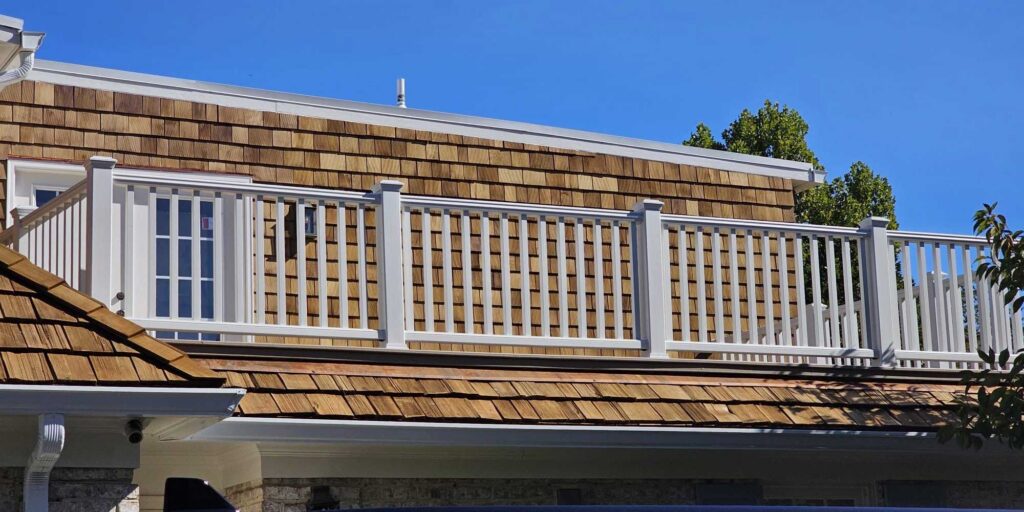
new cedar roof and balcony installed by roofing contractors

Hiring the wrong roofer can create problems that last far beyond the installation itself. A weak scope of work, unclear warranty terms, rushed sales pressure, or an unqualified crew can leave homeowners paying for mistakes that could have been avoided.

That risk becomes more visible after leaks, storm damage, or a sudden wave of contractors canvassing neighborhoods after severe weather. Homeowners comparing Northern Virginia roofing companies should look beyond the lowest estimate and focus on the qualifications, accountability, and communication that shape the full project experience.

In This Article

Learn what to verify before hiring, how to recognize storm chaser warning signs, what to ask a roofing contractor, and how to compare reviews, credentials, and warranty coverage with more confidence.

Why Choosing the Wrong Roofer Can Cost More Than the Roof Itself

A roofing estimate is only as reliable as the contractor giving it. When a company is not properly licensed, cannot explain its process clearly, or leaves warranty terms vague, the homeowner takes on unnecessary risk before the first shingle is removed.

Virginia contractors may hold Class A, B, or C licenses depending on the scope of work they perform. Homeowners should confirm that any roofer under consideration is properly licensed for the project being discussed before signing a contract or approving work.

The stakes rise after major storms. Virginia regulators have specifically warned homeowners to verify contractors following severe weather instead of relying on a sales pitch at the door. A local roofing company in Northern Virginia should be easier to research, easier to contact, and more accountable than a contractor with no meaningful regional presence.

What a Legitimate Northern Virginia Roofing Company Should Be Able to Show

The right contractor should be able to support their promises with clear documentation. These details help separate an organized professional from a company built around speed, pressure, or vague assurances.

Current License and Insurance Documentation

Homeowners can use the DPOR License Lookup to review a contractor’s standing. The business name, license details, and current status should match the information listed on the estimate or contract.

Proof of liability insurance and workers’ compensation coverage also matters. Valid certificates help homeowners confirm that the contractor operates responsibly and provide a stronger basis for comparing proposals beyond price alone.

A Real Local Presence

A licensed roofing contractor in Northern Virginia should be able to point to a clear service area, a verifiable business presence, and references from work completed in the region. Those details matter before the project starts and after the final cleanup is complete.

Local accountability becomes especially important when a homeowner has a follow-up question, warranty concern, or service need months after the installation. A contractor that expects to keep working in the area has a stronger reason to protect its reputation.

Written Scope and Clear Project Terms

A professional estimate should explain more than a total number at the bottom of the page. Homeowners should expect a written scope covering materials, expected project steps, cleanup, disposal, schedule, and payment terms.

That documentation protects both sides. It keeps the conversation grounded in the actual work being performed and reduces the chance of confusion once the project is underway.

Storm Chaser Warning Signs NOVA Homeowners Should Recognize

The most concerning sales tactics often create urgency before they establish credibility. Homeowners should be cautious when a contractor pushes for a fast decision before there has been time to verify the company’s qualifications.

Common red flags include:

  • Unsolicited door-to-door offers immediately after a storm
  • Pressure to sign a same-day agreement
  • Claims that a special price expires within hours
  • Large upfront payment demands
  • No verifiable Virginia license
  • No local office or meaningful regional work history
  • No references from Northern Virginia homeowners

Federal consumer guidance also cautions homeowners against paying more than half of a repair cost in advance after weather emergencies or natural disasters. A company may describe itself as a top-rated storm damage roofing contractor in NOVA, but licensing, written estimates, insurance documentation, and a professional inspection process carry far more weight than a rushed pitch.

Local Roofing Company vs. Out-of-State Contractor

An out-of-state contractor is not automatically unqualified, but homeowners still need a clear way to verify licensing, accountability, and long-term availability. That becomes harder when the company has no established local presence and may leave the market after the immediate storm-response period ends.

A local roofing company in Northern Virginia is more likely to understand regional permitting expectations, area-specific homeowner concerns, and the reputational value of repeat business in the same communities. It is also easier to research through recent project examples, Northern Virginia roofing company reviews, and local references.

The difference matters because roofing work is not a one-day transaction. The contractor’s ability to stand behind the project after installation is part of the hiring decision.

What to Ask a Roofing Contractor Before You Sign

Good questions keep the conversation focused on accountability instead of sales language. Before signing, homeowners should ask:

  • Who handles any required permit process?
  • Will any portion of the project be subcontracted?
  • If subcontractors are used, how are they supervised and documented?
  • What does the workmanship warranty cover?
  • How long does that warranty last?
  • Is the warranty transferable if the home is sold?
  • How will job site cleanup and material disposal be handled?

These questions reveal how the company manages work, communicates expectations, and thinks about the homeowner experience. The best roofing contractor in Northern Virginia is not simply the one who can install a roof. It is the one who can explain the project clearly and reduce avoidable uncertainty before work begins.

How to Compare Reviews, Credentials, and Warranty Coverage

Reviews are most useful when they reveal patterns, not just star ratings. Northern Virginia roofing company reviews on Google, the Better Business Bureau, and Angi can help homeowners assess whether customers consistently mention clear communication, reliable scheduling, clean job sites, and responsiveness after the work is complete.

Review volume and recency matter, too. A company with a long history of detailed, recent feedback provides a different signal than one with only a handful of brief reviews posted over a limited period.

Warranty language deserves the same level of attention. Manufacturer warranties generally address qualifying material defects under the manufacturer’s terms. Contractor workmanship warranties cover installation-related responsibilities, but the length, transferability, and specific coverage can vary.

Manufacturer certifications may also matter because they can reflect additional training, program requirements, or eligibility for certain enhanced warranty options, depending on the roof system and manufacturer. A roofing warranty in NOVA should be explained in plain language before the homeowner commits.

Protect Your Home by Choosing the Right Northern Virginia Roofing Company

Roofing decisions shape more than curb appeal. They affect installation quality, warranty protection, project organization, and how much confidence a homeowner has once the crew leaves. Price belongs in the comparison, but it should never carry more weight than licensing, documentation, accountability, and clear communication.

Pure Roofing is a licensed, locally rooted Northern Virginia roofing company serving homeowners across NOVA with transparent pricing, documented workmanship, and no-pressure estimates. Schedule your inspection to get a clear professional assessment and a stronger starting point for your roofing project.

Filed Under: Roofing

May 12, 2026 by Billy Sampson

A leak, missing shingles, or storm damage can turn a straightforward roof question into a much bigger conversation. Do you repair what’s there, or is it time for a full replacement?

Both options cost money, and getting the answer wrong goes in either direction. Replacing too early wastes money on a roof that still had useful life. Continuing to patch a system that’s already in decline leads to repeat calls, growing invoices, and a replacement bill that only gets larger the longer it’s delayed. This guide walks through how to evaluate repair versus replacement based on roof age, the scope of the damage, what the numbers actually look like, and what Northern Virginia homeowners should expect from a contractor before making either decision.

When Roof Repair Is the Right Call in Northern Virginia

A targeted repair makes sense when the roof is still in solid overall condition and the damage is limited to one clear area. A roof under 15 years old with a small section of damaged shingles, a single flashing issue, or one identifiable leak source usually doesn’t need a full replacement.

Good repair work comes down to precision. The contractor should be able to explain what failed, what the repair will correct, and why the rest of the roof still supports that narrower scope. In Northern Virginia, where wind, shifting weather, and flashing wear create problems that can look worse than they are, that distinction between an isolated issue and a system-wide concern is worth getting right.

When the broader roof is still performing well, a targeted repair can restore protection and buy several more years of reliable service without forcing a larger project.

When Replacement Becomes the Smarter Investment

The calculation shifts when problems stop being isolated. Replacement starts making more sense when the roof is 20 years old or older, when damage has spread across multiple sections, when leaks keep returning despite previous work, or when shingles are brittle and deteriorating in broad areas rather than just one spot. These are the signs that the roof is no longer a candidate for spot repairs.

Homeowners who keep paying for separate fixes often assume they’re dealing with a string of unrelated problems. In many cases, they’re dealing with a roof that has aged past the point where individual repairs add meaningful life to the system. Each repair buys less time, and the cumulative cost builds toward what a replacement would have delivered from the start.

The question worth asking is straightforward: does another repair genuinely extend the roof’s useful life, or does it just postpone a replacement that’s already overdue?

The 50 Percent Rule: A Practical Benchmark

Large repair estimates deserve a wider cost conversation. The 50 Percent Rule is a common industry benchmark, not an official standard, but a useful frame for the decision. If the cost to repair the damaged areas approaches half of what a full replacement would cost, the replacement conversation should be on the table.

That benchmark carries more weight when the roof is already past its midpoint in expected lifespan. A $4,000 repair on a 10-year-old architectural shingle roof with no other issues is a reasonable investment. The same $4,000 repair on a 22-year-old roof with wear showing in other areas is harder to justify.

The other factor is what comes next. A single repair estimate doesn’t tell you much if another repair is likely six months later. When weighing the cost of fixing what’s broken now against the cost of replacing the full system, account for the repairs you’re likely to need over the next two to three years, not just the one in front of you.

Repair vs. Replacement at a Glance

ScenarioRepairReplacement
Roof ageUnder 15 years20+ years
Damage scopeIsolated, single areaMultiple sections or slopes
Leak historyFirst or second occurrenceRecurring in same or different areas
Cost comparisonRepair under 50% of replacementRepair approaching or exceeding 50%
Remaining lifeSignificant useful life aheadNear or past expected lifespan

How Storm Damage Changes the Equation

Storm damage can complicate the decision because the most visible problem isn’t always the full extent of the concern. Wind can lift unsealed shingles and create paths for water intrusion that aren’t obvious from the ground. Hail can damage asphalt through denting, granule loss, and cracking in ways that weaken the material without immediately causing leaks.

A storm can also expose weaknesses that were already developing. A roof that appeared functional before the event may have been closer to the end of its useful life than anyone realized. That’s why storm-related concerns across the NoVa area deserve a thorough, roof-level inspection rather than a quick visual check from the ground.

Clear documentation of the damage, including photos and a written assessment, gives you a complete record of what happened and supports whatever decision comes next, whether that’s a targeted repair or a full replacement.

What a Contractor Should Explain Before You Decide

Price alone doesn’t tell you enough. A thorough roofing assessment should explain what the contractor found, how those findings support the recommendation, and what each option would actually accomplish.

That means evaluating more than surface damage. A qualified contractor should address decking condition,flashing integrity around penetrations and transitions, ventilation, granule loss, and whether multiple areas are showing the same pattern of wear.

You should also expect a clear explanation of what a repair would correct, what a replacement would solve that a repair wouldn’t, and what’s driving the price difference between the two. A contractor who pushes replacement after a five-minute look, avoids putting details in writing, or can’t explain why a smaller repair falls short hasn’t given you enough to make a confident decision.

Getting at least two written estimates from licensed, locally based contractors before committing to either path is a reasonable step, especially for a decision this significant.

Make the Stronger Decision Before Costs Build

The choice between repairing and replacing your roof affects more than the immediate invoice. It shapes future leak risk, repeat service costs, and how much confidence you can carry into the next stretch of Northern Virginia weather. Pure Roofing provides homeowners with a clear, documented assessment of which path makes the most sense for their specific roof, backed by straightforward recommendations tied to condition, performance, and long-term value. Schedule your inspection to compare your options with an experienced local team.

Filed Under: Roofing

May 12, 2026 by Billy Sampson

Homeowners with aging roofs often want a simple answer to one question. How many years do I have left? In Northern Virginia, that depends on more than the year the roof was installed. Humid summers, freeze-thaw winters, seasonal storms, and years of sustained sun exposure all affect how long a roofing system actually performs, and national averages rarely reflect what happens here.

Material matters, but so does everything underneath it and around it. Ventilation, installation quality, maintenance habits, and the specific weather your roof withstands year after year determine whether it reaches its full lifespan or falls short. Recognizing where your roof stands in that equation is what separates a planned replacement from an emergency forced by a leak you didn’t see coming.

What Northern Virginia’s Climate Actually Does to Your Roof

Roofs across the NoVa area deal with overlapping forms of seasonal stress that don’t let up. The National Weather Service climate records for the Washington, D.C. region show the kind of temperature swings, rainfall totals, and storm variability that wear roofing systems down faster than homeowners expect.

  • Summer heat and UV exposure break down asphalt shingles and accelerate surface aging over time.
  • Humidity encourages algae and moss growth, particularly on shaded roof sections that stay damp.
  • Winter moisture works into small openings, freezes, and expands, widening cracks over repeated cycles.
  • Storm season layers on wind-driven rain, lifted materials, and flashing damage.

That combination means a roof’s condition tells you more than its age. Poor ventilation, heavy shade, clogged gutters, and repeated storm exposure can push a roof toward replacement well ahead of any manufacturer timeline.

How Long Different Roofing Materials Last in This Climate

The type of material on your roof is a useful starting point, but how long it actually lasts in Northern Virginia depends on installation quality, attic conditions, and maintenance. InterNACHI’s life expectancy guide provides broad industry benchmarks. Here’s how those numbers tend to hold up locally:

  • 3-tab asphalt shingles: Around 20 years. Heat, wind, granule loss, and the quality of the original installation all affect how quickly they decline.
  • Architectural asphalt shingles: Around 30 years, though storm exposure, flashing details, and ventilation can shorten that window.
  • Metal roofing: 40 years or more in many cases, depending on panel type, fastener quality, coatings, and how well the system was installed.
  • Cedar or wood shakes: Closer to 25 years, with moisture, shade, airflow, and regular upkeep playing an outsized role in how long the material holds up.
  • Low-slope systems: More variable, especially when ponding water, drainage problems, UV exposure, or seam wear are part of the picture.

Cedar shake roofs deserve a specific note here. While cedar is considered a premium material, its performance in Northern Virginia is heavily influenced by moisture. Shaded sections that stay damp age faster, trap organic debris, and need more attentive care than many homeowners expect when they choose the material.

How NOVA’s Seasons Wear a Roof Down

Winter: Freeze-Thaw Cycles and Ice Dams

Small vulnerabilities create the biggest winter problems. Water enters through a cracked shingle, a lifted flashing edge, or a worn seal around a roof penetration. When temperatures drop, that moisture freezes and expands. Over repeated cycles, the opening gets wider and the opportunity for leaks grows.

This kind of gradual damage often stays hidden. You may not see anything wrong from the ground, but the roof can be losing protection around edges, valleys, and transition points where materials overlap.

Attic conditions play a role here, too. ENERGY STAR notes that proper attic ventilation keeps the roof deck colder in winter, which reduces the risk of ice dams forming along the eaves. A roof’s lifespan depends on the full system working together, from the shingles on top to the ventilation underneath.

Summer: Heat, Humidity, and UV Breakdown

Summer stress is less dramatic but just as damaging over time. Prolonged heat and UV exposure dry out asphalt shingles, accelerate surface aging, and contribute to granule loss. Humidity supports algae and moss in shaded areas, which holds moisture against the roof surface and makes it harder to assess the true condition of older materials.

The Asphalt Roofing Manufacturers Association emphasizes that asphalt performance depends on proper flashing, effective ventilation, drainage, and regular inspection of trouble spots. In practice, a roof with clogged gutters, failing flashing, or sections that stay damp after rain will deteriorate faster than its age alone would suggest.

Seasonal wear has a compounding impact; what summer weakens, winter exposes.

Warning Signs That Your Roof Is Reaching the End

Warning signs of an aging roof are more concerning when they appear across multiple areas of the home rather than in a single isolated spot. On the exterior, look for curling, cupping, cracked, or missing shingles, granule buildup in gutters, sagging sections or visible dips in the roofline, widespread algae or moss, and flashing that appears lifted, rusted, or separated.

Interior signs deserve the same attention. Water stains on ceilings or walls, musty odors in the attic, visible moisture or mold tied to roof leaks, and unexplained shifts in energy performance can all point back to the roof, the ventilation, or both. The EPA notes that moisture control is central to preventing mold problems, so repeated dampness is worth addressing before it spreads.

One issue on its own may still be repairable. Several appearing at once usually means the broader system needs a professional review.

What Roof Age Means for Home Value and Insurance in NoVa

Many homeowners are surprised by how often roofing conditions come up during real estate transactions, refinancing, and insurance renewals. Lenders and home inspectors evaluate the roof as part of the property assessment. Insurance carriers may decline to write or renew a policy on a roof past a certain age, and that’s a reality many homeowners don’t anticipate until they’re in the middle of a deal.

Knowing your roof is ready for inspections puts you in a stronger position for those conversations. Replacement decisions get more expensive and more complicated once interior damage, recurring leaks, or storm-related problems have already appeared.

When Repair Stops Making Sense

Repairs are the right call when damage is isolated and the rest of the roof is still durable. Replacement becomes the better decision when leaks keep coming back, repairs are needed across multiple sections, shingles are brittle in broad areas, or the cost of ongoing repairs keeps climbing without restoring real confidence in the system.

The practical question for any aging roof in NoVa is straightforward. Does another repair meaningfully extend the roof’s useful life, or does it just push off a replacement that’s already overdue?

Plan Your Roof Replacement Before the Roof Decides for You

If your roof is approaching or past its expected lifespan, waiting is the most expensive decision you can make. Northern Virginia’s climate doesn’t give aging materials the benefit of the doubt, and the gap between a planned replacement and an emergency one is almost always measured in dollars.

Pure Roofing helps homeowners evaluate asphalt, cedar, metal, tile, slate, synthetic, flat, and low-slope systems with recommendations based on your roof’s actual condition and the demands of this climate. Contact Pure Roofing to schedule a professional inspection and have an honest conversation about your options with a team that knows Northern Virginia roofing from the deck up.

Filed Under: Roofing

  • « Go to Previous Page
  • Page 1
  • Page 2
  • Page 3
  • Page 4

Primary Sidebar

Pure Roofing logo

Service Areas

VA | DPOR#2705183167
MD | MHIC#05-151711
NC | Coming Soon
PA | PA220442

Licensed | Insured | Bonded

Request An Estimate

Contact

Virginia & Maryland
9352 Mike Garcia Drive
Manassas, VA 20109

Pennsylvania
206 S Market St. #207
Elizabethtown, PA 17022

(571) 725-2515
info@pureroofingva.com

Follow Us

Link to company Facebook page

Link to company Instagram page

Link to company LinkedIn page

Link to company X page

  • Roofing

    • Residential
    • Commercial
    • Emergency
    • Storm Damage
    • Financing
  • Services

    • Doors & Windows
    • Gutters
    • Insulation
    • Siding
    • Areas Served
  • Company

    • About
    • Contact
    • Referral Program
    • Our Process
    • Team
  • Resources

    • Blog
    • Careers
    • Gallery
    • Insurance Claims
    • Reviews

© 2026 Pure Roofing, LLC·Powered by 321 Web Marketing·Privacy Policy·Terms Of Use